

Lip fillers – needle versus cannula
By Dr Rachael Syvret
Lip filler is the next most popular procedure, after botox. Over the last couple of years, the number of people choosing to undergo lip augmentation has soared. One of the nice things about lip augmentation is that it can be done to whatever extent the client wishes.
For most clients, they are after a little bit more volume; often to replace what they have lost with age, and sometimes some definition to the lip border. A common question in the world of lip augmentation is whether it is best to use a needle or a cannula to carry out the work.
So, let’s look at a comparison of the two options…
Needle
A needle is exactly what is says on the tin. It is a sharp, short needle that attaches to the end of the filler syringe. The downside to using a needle is that every time a needle enters the lip, there is the potential for some pain (although numbing cream is applied beforehand) and for bleeding to occur.
Risks
A risk of bleeding means that there is also a risk of bruising and swelling. Because a needle is sharp, it is at risk of puncturing the blood vessels that surround and supply the lips. If filler were to be deposited into these blood vessels, it could lead to an interruption in the blood supply to the lips and subsequent necrosis of the lip.
Benefits
The benefit of using a needle however, is precision. By using a needle, we can achieve crisp, sharp lip borders and increase the lip volume exactly where we want to. We can apply bolus injections of filler into specific GK points to help to structure the lip, and produce a tailored lip augmentation for each client.
Cannula
A cannula looks similar to a needle; however, it is generally longer and is blunt ended. To use a cannula for lip augmentation, typically two entry points are made – one to each side of the corner of the mouth using a needle. Once these entry points have been made, the cannula can be pushed through into the lip.
Benefits
As a cannula is blunt ended, the risk of filler being deposited into a blood vessel is low, as it tends to push the vessels out of its way, rather than pierce them. This, however, isn’t 100% guaranteed. Because there aren’t multiple entry sites, the risk of bruising and bleeding is also much lower, than it is with a needle, and the procedure tends to be more comfortable for the clients.
Risks
This sounds great – why would anyone not opt for this? I’m sure is what you are thinking. The major downside is that you’re much less able to precisely inject the filler. Yes, it can give a nice increase in volume, but a cannula will struggle to give you those crisp edges and specifically direct your filler injections to the area you want to try to tent up, or pull down.
So what’s best?
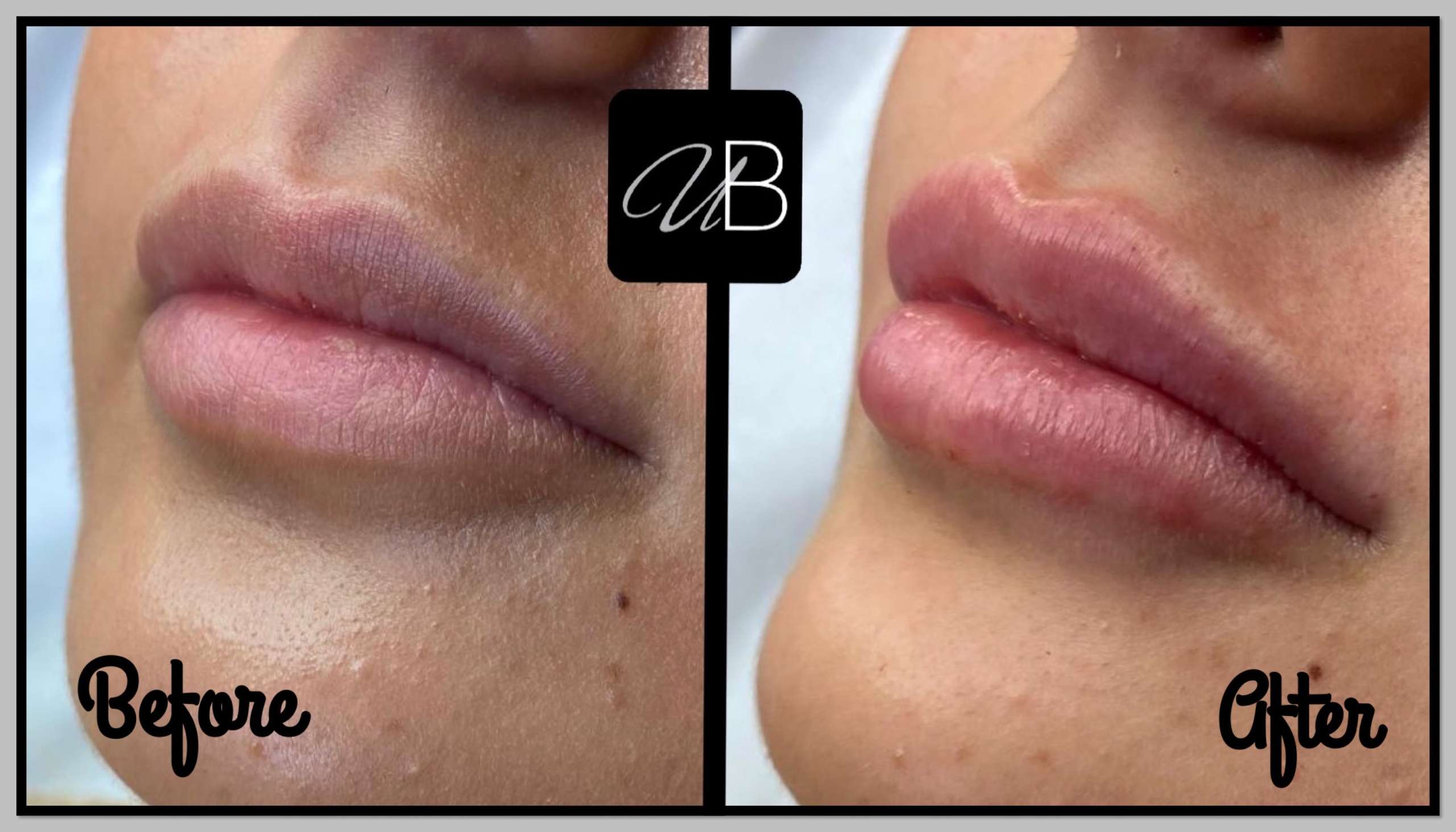
There are definite positives for the use of a cannula, but in our experience at Underlining Beauty, we find that the results just don’t match those of when a needle is used. We always apply a strong numbing cream before lip augmentation and any bruising and bleeding normally settles quite quickly. Arnica can be used to speed up the healing process. We always assess the blood supply to the lips throughout the augmenting procedure, and again at the end. In our opinion, needles give higher definition and prettier outcomes than a cannula.
Please always follow our aftercare advice to ensure optimum results.

Are you a healthcare professional looking to extend your choice of treatments to your patients? Take a look at our cheek and lip augmentation course to learn the best techniques at Underlining Beauty Training Academy.

